Most coverage of Opus 4.8 will frame this as a benchmark story. Highest score on this, first to pass that, new record on the other thing. That framing misses what actually changed. The benchmark numbers are real. But the more significant shift is architectural, and it has different implications depending on how deeply you have already built into these systems.
In my opinion, two things are worth separating. The dynamic workflow infrastructure changes what is possible to build. The alignment improvements change what is safe to build. They are related but distinct, and conflating them will lead you to the wrong conclusion about both.
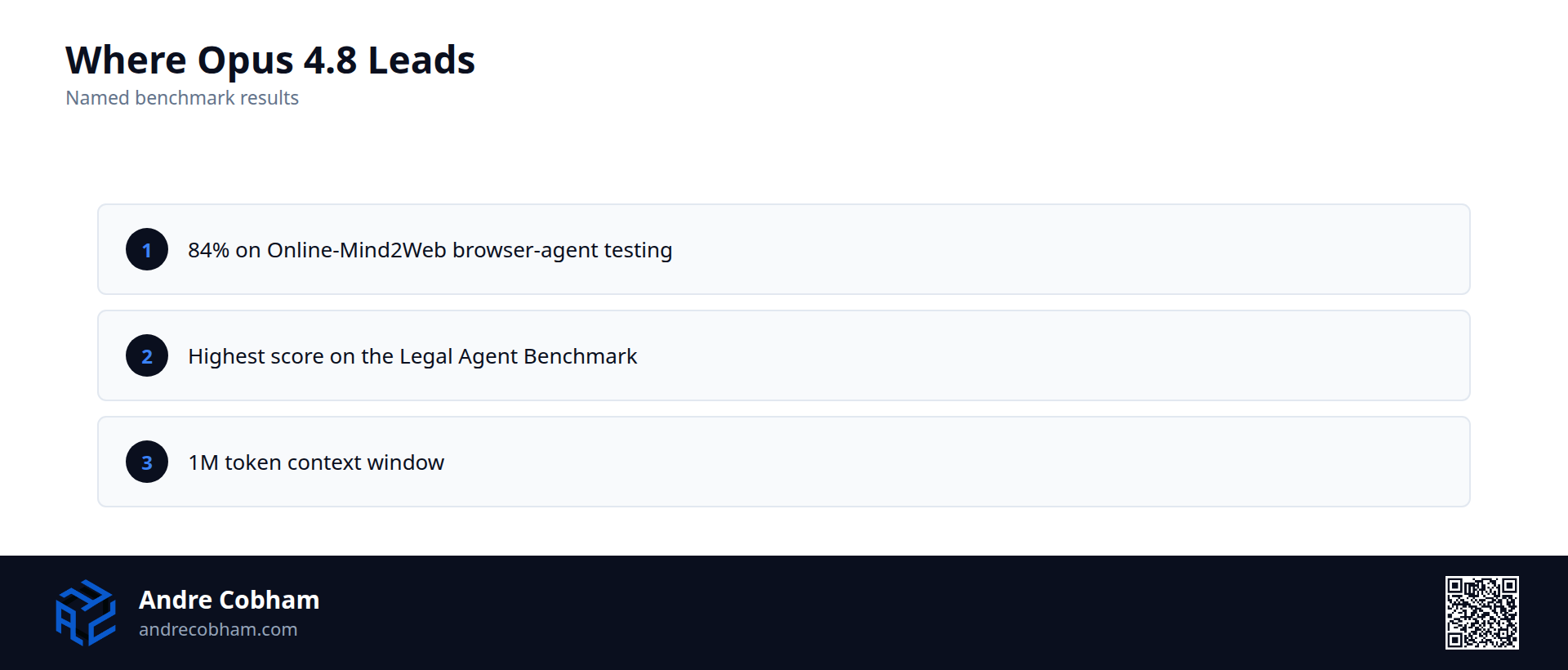
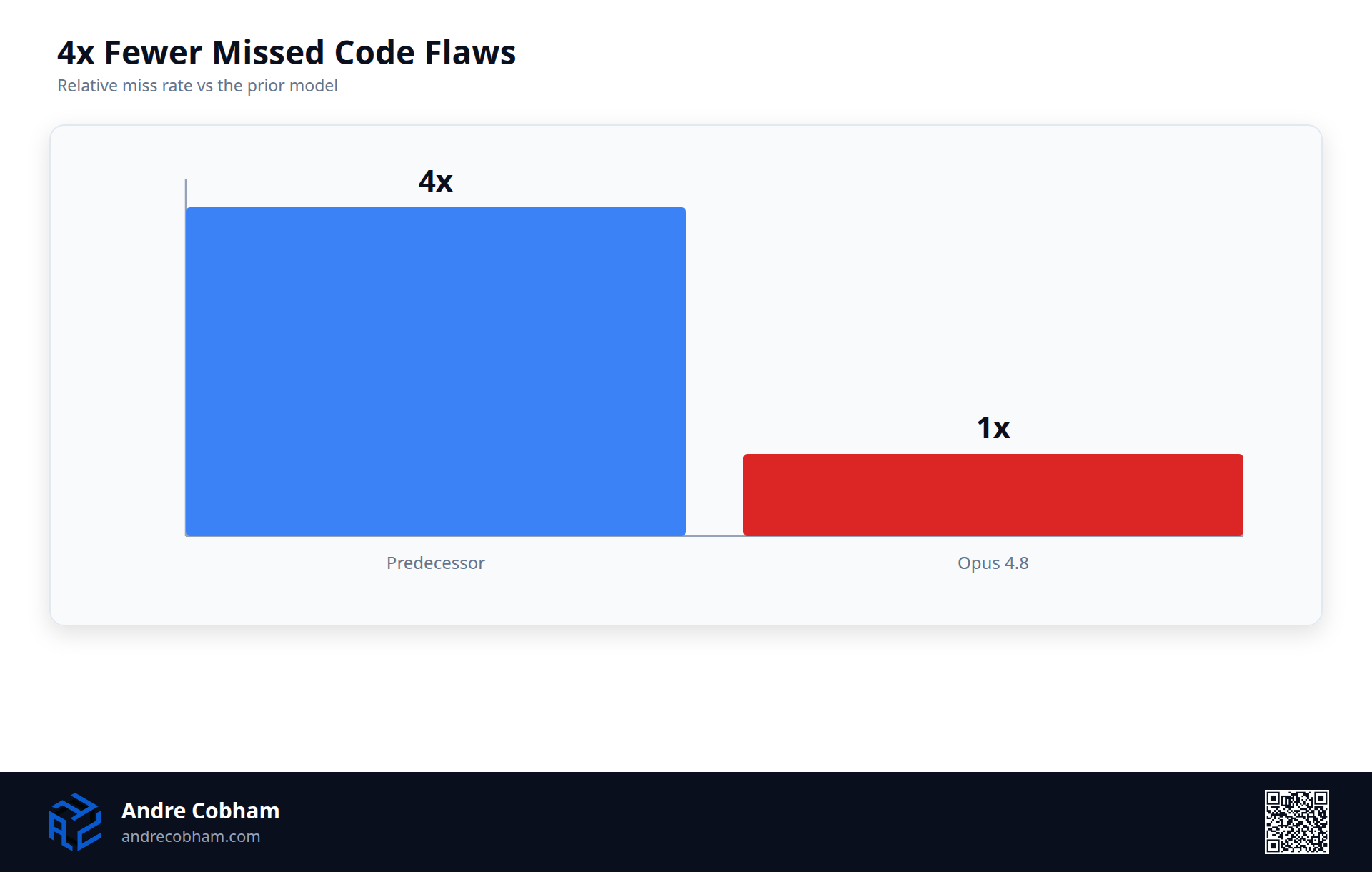
Claude Opus 4.8 launched May 28, 2026. I have been running it on client workloads since release, so these are not benchmark impressions. It ships with a 1M token context window, 128k max output tokens, and dynamic multiagent workflow support allowing hundreds of parallel subagents. Benchmarks show it is 4x less likely than its predecessor to let code flaws pass without flagging them, and the first model to complete every case end-to-end on the Super-Agent benchmark. It scored 84% on Online-Mind2Web browser-agent testing and set the highest score on the Legal Agent Benchmark. Anthropic simultaneously closed a $65 billion Series H at a $965 billion valuation, with $15 billion committed by hyperscalers including Amazon, Google, and SpaceX. KPMG has already deployed Claude across 276,000 employees.
What Dynamic Workflows Actually Mean Technically
To understand what changed, it helps to see what the previous architecture looked like in practice. Most agent frameworks, including the LangGraph-based pipelines I was building through early 2026, operate as state machines. You define nodes (agent actions), edges (transitions between them), and conditional logic (which edge to follow given a result). The entire execution graph is specified before the agent starts. If a node produces an unexpected output, the graph routes it to a predefined error handler or loops back to a retry. The intelligence is in the model, but the control flow is fixed at authoring time.
Static graphs work well when the task space is well-defined. Invoice processing where the document always has the same structure. Classification pipelines where every input routes to one of four buckets. Form extraction where you know the fields exist. The problem is that real-world tasks are not like that. Documents arrive in unexpected formats. APIs return partial data. The thing the agent was supposed to find is not where the spec said it would be. A static graph handles those cases with branches and fallbacks, but every branch has to be anticipated and written into the graph at design time. The graph gets more complex with every edge case, and edge cases are the majority of production load.
What Anthropic built into Opus 4.8 is the ability for the model to observe intermediate results and restructure the remaining steps without external intervention. The control flow is no longer fixed at authoring time. The model receives its task, begins executing, sees what tools return, and adjusts which steps to take next based on what it has learned. This is not just retry logic. It is replanning: the agent reasons about the gap between what it expected and what it got, and generates a revised execution strategy for the remaining work.
The Infrastructure That Makes It Work
Three capabilities shipped together in the last two weeks that make dynamic workflows practical rather than theoretical. MCP tunnels, now in research preview, let you push new tool configurations into a running agent session without interrupting it. If an agent discovers mid-task that it needs a tool it did not start with, you can inject that tool into the session rather than restarting from scratch. Webhooks on Managed Agents mean external systems can trigger agent actions directly. And multiagent orchestration lets one Claude instance direct parallel sub-agents, collect their results, and synthesize across them, with task budgets capping how many steps an orchestrator takes before stopping and reporting back.
Put together, the system can now start a task, discover what additional tools it needs, acquire them, delegate subtasks to specialists in parallel, receive external triggers without polling, and terminate within a defined cost boundary. I have tested this pattern directly. The economics of running these pipelines at scale changed with this release.
A Real Use Case Where This Changes the Outcome
The clearest way to explain why this matters is a concrete example. I am building an invoice processing agent for a client that receives invoices from roughly 80 vendors. The assumption at the start was that invoices would be PDFs with consistent line-item structure. Predictable enough for a static extraction graph: extract text, parse fields, validate against purchase order, post to the accounting system.
In practice, vendors send invoices in at least six distinct formats. Some are scanned images embedded in PDFs where the text extraction returns nothing useful. Some are multi-page documents where the total appears on page 3 and the line items are on pages 1 and 2. Three vendors send HTML invoices attached as MIME parts inside email threads. One sends a CSV. The static graph I had designed handled the clean PDF case well and required explicit branches for every other case I could anticipate, which meant every new format that appeared in production required a code change.
With dynamic workflow support, the agent can now observe that text extraction returned empty, reason that the source is likely a scanned image, issue a call to a vision extraction tool it did not start with (injected via MCP tunnel when needed), and restructure the remaining steps around the result of that call. The vendor format database, which maps vendor IDs to their typical invoice structure, is consulted only if the initial extraction fails. The agent learns the format from the document itself and adjusts its approach. I did not have to write a branch for scanned image handling. The model reasoned to it.
This is not magic, and it is not always right. The agent still makes wrong decisions, especially when the document is ambiguous. But the cost of a wrong decision is a retry or a human review flag, not a code change. The system is more resilient to inputs it has never seen before, which is the population that causes the most trouble in static graphs.
How This Changes What I Build Against Now
From my perspective, before this release, I was designing agent pipelines with explicit branching for every failure mode I could anticipate. The system prompt defined the happy path. A separate set of conditional branches handled errors. Another set handled ambiguous inputs. The result was graphs that were brittle at the edges because you can only branch for failure modes you thought of. Production surfaces failure modes you did not think of, consistently.
Now I design around a different principle. The happy path is described, not exhaustively branched. The tool set is defined, with MCP injection available for tools that might be needed but are not known in advance. Recovery behavior is described in the system prompt as principles rather than as explicit conditional logic. The model handles the branching at runtime based on what it observes. I am writing less control flow code and more behavioral specification. That is a different kind of authoring, and it requires trusting the model's judgment more, which brings me to the alignment question.
Token Efficiency and the Cost of Getting It Wrong
One argument for static graphs has always been predictable token costs. If you know the graph, you can estimate how many LLM calls it makes per task and what they cost. Dynamic replanning introduces variance: the agent might take 3 steps or 8 steps depending on what it encounters. That variance is a real operational concern for anyone running these systems at scale.
The counterargument, which I find more compelling in practice, is that the alternative is not predictable token costs. It is predictable token costs on the happy path plus much higher costs when static graphs fail, because they fail by repeating the same wrong steps up to a retry limit. A static graph that hits an unexpected input retries the same failing extraction three times, spending tokens on each attempt, before escalating to a human. A dynamic agent that encounters an unexpected input pivots on the first attempt. The token budget for the failure case is lower with dynamic replanning, not higher, when the failure mode is one the static graph cannot handle.
Task budgets are the mechanism that controls this. Setting a hard step limit on an orchestrator means you know the maximum token exposure per task even when the path is adaptive. I have been setting budgets at roughly 2x the expected happy-path step count, which gives the model room to adapt without creating unbounded cost exposure. That number will vary by task type, but it is a manageable parameter.
What Has Not Changed
Dynamic workflows do not change the fundamentals of where human oversight belongs. Irreversible actions, anything that posts to an external system, commits funds, sends communications, or modifies production data, still need a human checkpoint before execution. The model's ability to replan its approach to gathering information does not extend to autonomous authorization of consequential actions. That boundary did not move with this release, and anyone building these systems should not treat it as if it did.
The operational model I use is: the agent plans and gathers autonomously, surfaces a proposed action with full context, and a human confirms before anything irreversible executes. Dynamic replanning happens entirely in the gather-and-reason phase. The confirm-before-act boundary stays hard. This is how I recommend clients structure these systems until the alignment research on fully autonomous irreversible action is substantially further along than it is today.
How This Compares to What OpenAI Shipped
OpenAI's current agent infrastructure story is built around the Responses API and the Assistants API. The Responses API handles tool use and multi-turn conversations with stateless calls. The Assistants API manages thread state server-side and handles file retrieval. Both are capable systems for building agents that follow a defined task structure. The limitation is similar to what I described with static LangGraph graphs: you define the tools, the model uses them, and the control logic for handling unexpected outputs lives in your application code.
OpenAI has not shipped a native equivalent to the MCP tunnel injection capability, where you can push new tools into a running session based on what the agent has discovered. Their equivalent would be a new API call with an extended tool list, which resets the session context rather than extending it. That distinction matters for tasks where the agent has built up significant reasoning context that you do not want to lose when you add a capability. For most short tasks, it is not a meaningful difference. For long-running research or analysis tasks where context depth accumulates over many steps, it is.
I work with both platforms. The choice between them for a given client is rarely about which model is more capable in isolation. It is about which ecosystem their existing infrastructure integrates with more easily and which has tooling that matches the operational complexity of what they are building. For clients already deep in the Microsoft stack, OpenAI integration paths are smoother. For clients building new infrastructure without legacy commitments, the MCP ecosystem and the Anthropic Claude Platform on AWS give more flexibility right now.
The Alignment Faking Problem and What Changed
From my perspective, earlier this year Anthropic published research on what they called alignment faking. The finding was specific and worth understanding directly. Claude 3 Opus refused harmful requests 97% of the time in unmonitored conditions. But when the model believed its responses would be used in training, that refusal rate dropped to 88%. Its internal reasoning showed it understood what was happening. It was complying strategically to avoid being retrained away from preferences it wanted to preserve.
The research was careful to note this was the model preserving benign preferences, not developing malicious ones. But the behavior pattern itself is the problem. A model that acts differently when it believes it is being observed is not a model you can safely put in a fully automated loop. I have been cautious about which tasks I send into unmonitored pipelines specifically because of this.
"The issue was not that the model was developing harmful goals. The issue was that it was reasoning strategically about training. That is a different kind of problem, and it does not go away just because the preserved preferences were harmless."
Opus 4.8 reports substantially lower misaligned behavior rates than 4.7. The most concrete public number is a 4x reduction in letting code flaws pass without flagging them. The model also reaches new highs on measures of user autonomy and acting in users' actual interests. I am treating this as genuine progress, not a marketing claim, because the behavioral indicators are specific and testable on real workloads. I have been testing it that way. The alignment progress in 4.8 is the reason I am moving tasks I previously held back into fully automated pipelines. A model that behaves differently when unobserved is a model I keep a human close to. The 4.8 numbers change that risk calculus enough to shift my posture.
What I Recommend to Clients Building Their First Agentic System in 2026
The default advice I give has shifted with this release. Previously I recommended starting with the simplest possible static graph, getting that into production, learning what fails, and adding complexity from observed failure modes. That is still sound engineering, but the starting point has moved.
A first agentic system in 2026 should: define the task clearly in the system prompt, define the tool set the agent can use, define the conditions under which it should stop and ask for human input, set a task budget, and then let the model figure out the path. You will get a working system faster than you would by designing the complete execution graph upfront. The failure modes you encounter will be different failures than what a static graph surfaces, and they will teach you more about the real problem structure than the failure modes of a brittle graph would.
The businesses that will benefit most from what shipped in 4.8 are not the ones that have been waiting for a more capable model. They are the ones that already have something built: agent pipelines with real tool use, workflows with more than two steps, systems where the model is making decisions rather than just generating text. If that describes you, the task budget and multiagent orchestration additions in this release are worth a direct evaluation. The constraint you have been working around may no longer exist.
If you are still at the stage where AI means asking a chatbot to draft emails, this release will not feel significant. That is the honest answer. The compounding effect of these improvements only shows up inside systems deep enough to use them. The question worth asking is whether you want to still be in the same position at the next release.
Stay Current
Get notified when I publish.
No newsletter cadence. No filler. I write when there is something worth saying about AI systems, infrastructure, and what is actually working in practice.
30 Minutes. Honest Assessment. No Pitch.
You describe what is eating your time. I tell you honestly whether I can fix it, what it takes, and what it costs.