A Decade Running Marketing Ops for Real Businesses.Now I Build the AI Systems Behind Them.
I ran SEO, SEM, and marketing operations for service businesses for ten years before I built a single automation system, so I know exactly where the manual work costs you money. I now build the AI infrastructure that removes it, sized for small and midsize businesses, not enterprise IT budgets.
Most AI initiatives fail because they are built on tools, not outcomes.
Organizations engage this practice when in-house automation has stopped scaling, AI tool investments are not producing measurable returns, or a significant system build is being planned and requires architecture review before resources are committed.
Every engagement begins with a measured baseline and closes when documented outcomes have been achieved. That standard is non-negotiable: if there is no measurable business outcome, the work is not complete.
The failure patterns are consistent across industries: data that cannot be trusted at volume, workflows too fragile to automate reliably, and organizations that adopted AI tools without building the underlying system architecture. Those structural gaps are what this practice closes.
Most follow-up tasks, scheduling requests, and approval workflows run on human attention that should be elsewhere. AI agents take end-to-end ownership of these processes, from trigger to resolution, without anyone in the loop. The result is a system that works at 3am on a Sunday the same way it does at 9am on a Monday.
Lead follow-upUnder 8 minutes from form submission to first contact. No rep required.
SchedulingAppointment booking handled end-to-end. No back-and-forth, no inbox overhead.
ApprovalsRouted, escalated, and closed automatically. Humans only see the exceptions.
Intelligent Automation
Your operations are losing revenue every day the gaps stay open.
Manual handoffs between tools, reporting that runs a week behind, CRM data nobody fully trusts. These are not workflow problems. They are revenue problems. End-to-end automation connects your stack into a single system that runs faster, produces cleaner data, and does not depend on someone remembering to do the next step.
ReportingLive dashboards built from your actual stack. No manual exports, no stale spreadsheets.
CRM dataRecords updated at every touchpoint automatically. The data your team actually uses.
HandoffsTriggers fire between tools the moment a condition is met. Nothing waits on a human to notice.
AI Enablement
Access to AI tools is not the same as using AI effectively.
Most teams with AI access show lower adoption than expected because the rollout stopped at the license. The work is in prompt strategy, workflow integration, and role-specific programs that give people a concrete target to hit, not a tool to figure out on their own. Every engagement closes with a documented ROI figure tied to time saved or output increased.
Prompt strategyRole-specific prompts built for the actual work each team does. Not generic examples.
Workflow integrationAI embedded into existing tools. No new platform to learn, no disruption to current process.
Measured outputEvery engagement closes with a documented ROI figure. Time saved or output increased, quantified.
AI Infrastructure
Running AI on someone else's server carries risk you do not need.
Every token you send to a third-party API leaves your environment. That means client data, internal documents, and proprietary process information passing through infrastructure you do not control. Private on-premises deployment keeps all AI processing inside your network, with no per-token costs at scale, no vendor API dependencies, and no compliance exposure from data leaving the building.
Data stays insideAll AI processing runs on your hardware. Nothing leaves the building. No third-party API exposure.
No per-token costFixed infrastructure cost. Run as many queries as the work demands with no usage bill attached.
Compliance-readyLegal and compliance teams can review the full stack. Nothing goes to a vendor you cannot audit.
Client Results
Documented Outcomes from Production Deployments.
Every result below is from a live production engagement. No projections. No estimates. The figures represent measured outcomes documented after each system went live.
Home Services
+41%
Jobs booked in 90 days
Before
Home services company routing all inbound calls manually. 48-hour average response time. Leads going cold every weekend with no coverage.
After
AI dispatch agent handles all inbound scheduling end-to-end. 8-minute average response time. 41% increase in booked jobs over 90 days.
$87K in outstanding invoices sitting unresolved. 42-day average collection cycle. Manual follow-up spread across a disconnected CRM and email stack.
After
Automated invoicing workflow with triggered follow-up sequences. Outstanding balance reduced to $8K in 60 days. Collection cycle cut from 42 to 16 days.
AI projects most commonly fail in the gap between capability and operational execution.
Production deployments only.
Not pilots. Not prototypes. Everything documented here ran in production for an actual client with real workflows, real stakes, and real costs if it failed. The results shown are what was measured after the work shipped.
Outcomes measured, not projected.
Every engagement starts with a baseline. The work does not end until the numbers change. That is how results get documented rather than invented. If there is no measurable outcome, the engagement is not complete.
Architecture built to sustain.
The goal is not a handoff. The work is designed from day one to operate without daily maintenance. That means choosing infrastructure that the client can sustain, not infrastructure that requires an ongoing retainer to stay alive.
Common Questions
What People Ask Before Getting Started
No. The systems I build are designed to run without a technical operator. They connect to tools your team already uses, and the automations trigger and complete without anyone touching a dashboard or running a script.
Start with Ebby AI for free — describe your situation and Andre reviews every intake personally within one business day. If you need a researched answer you can act on, the AI Session Assessment is $150 for one focused hour and includes a written Tech Stack Report.
Most initial deployments take 2 to 6 weeks depending on complexity. I build in two-week sprints with something working and testable at the end of each sprint.
For most business automation I use Make or n8n connecting your existing cloud tools. For clients with stricter requirements, I build private AI infrastructure where models run locally inside your own environment with no external data transmission.
Most AI consultants produce strategies and decks. I produce systems that run. Every engagement ends with something deployed and verified, not a document recommending what someone else should build.
Book the free 30-minute strategy call. You describe the operational problem costing you the most time or money. I tell you honestly whether automation is the right solution, what it would take to build it, and whether this engagement is the right fit.
Latest from the Field
AI Implementation Notes. Published When There Is Something Worth Saying.
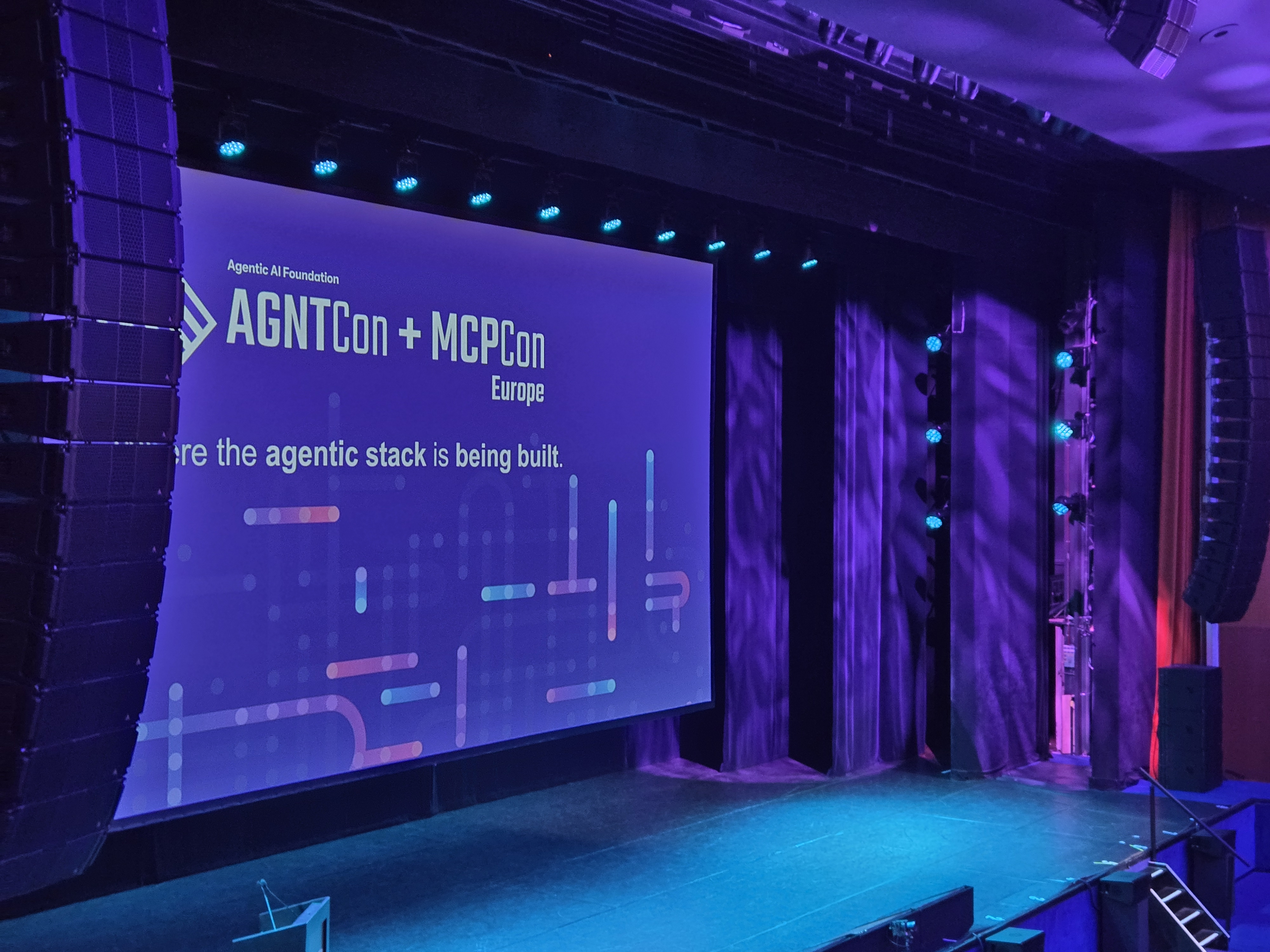
The second AgentCon in Europe happened in Amsterdam in September 2026. The schedule alone told the real story: developers were on stage admitting what broke, what they misunderstood, and what they built before they understood the goal. Here is what I am bringing back to client work.
The call that comes eight months after an AI build ships is always the same shape: nothing broke, but the system no longer matches the business. That gap is what a managed retainer exists to close.
A viral post this week made the point I have verified for twelve years: AI does not fix broken processes, it accelerates them. Here is the order that actually works.
Working with Andre has been straightforward from the start. He is focused on getting real leads, not just making things look nice. Since working with him, we have seen a solid improvement in both the volume and quality of calls coming in. He actually follows through on what he says he will do.
Saudin Bahonjic
President, Twin State Basement Services
“
I have had the pleasure of working with Andre as my SEO manager, and the results have been nothing short of outstanding. He took the time to understand my business, industry, and goals, then built a clear strategy tailored to my needs. I cannot recommend Andre enough.
You describe what is eating your time. I tell you honestly whether I can fix it, what it takes, and what it costs. If it is not the right fit, I will say so.